
Creatine 101: Your Complete Guide to the Most Studied Supplement on the Market
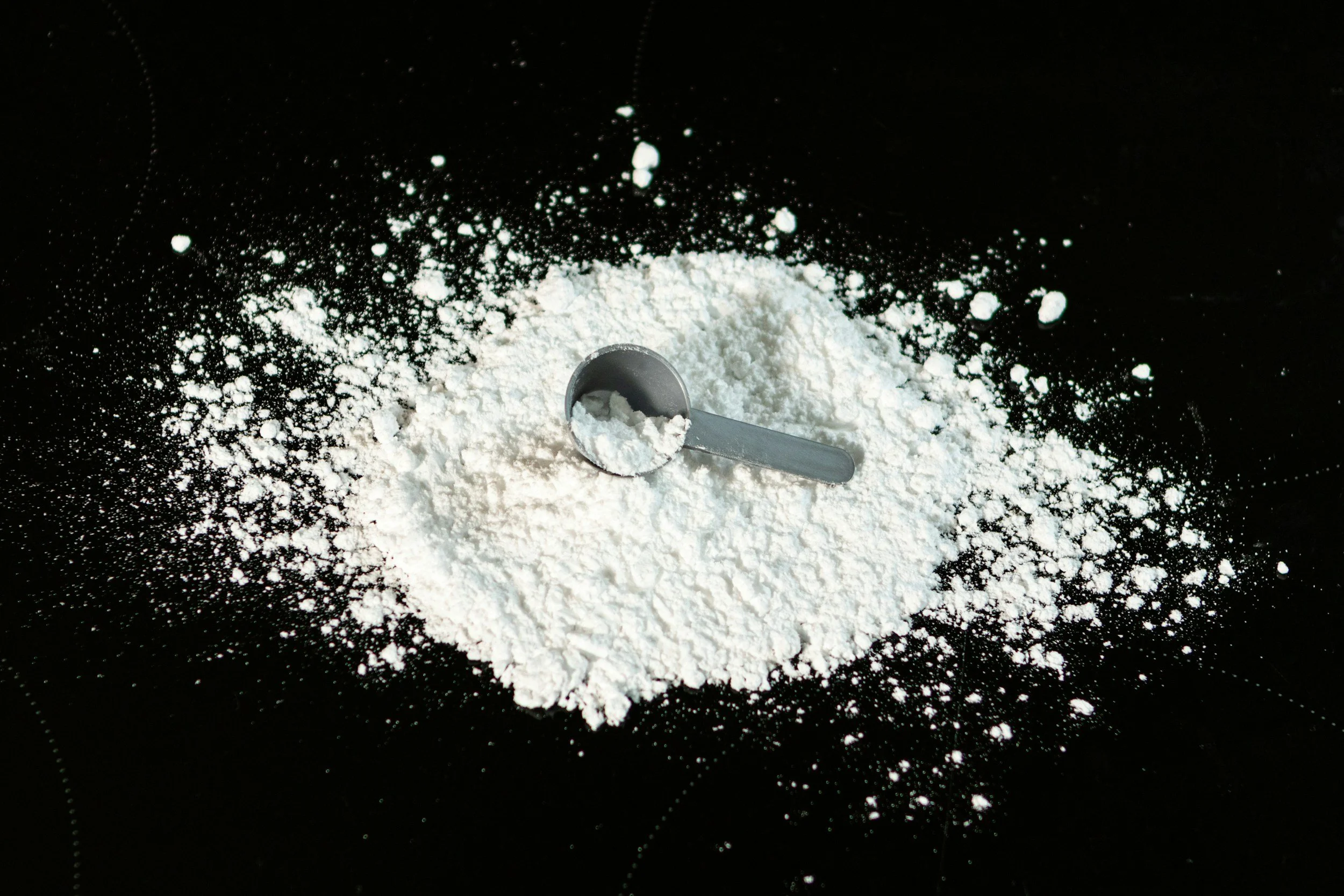
The Ultimate Guide to Creatine: Types, Dosing, and the Gold Standard of Purity
Creatine stands as one of the most thoroughly researched and effective supplements available in the wellness and athletic performance landscape. It is a naturally occurring compound, synthesized from amino acids (arginine, glycine, and methionine), found predominantly in your muscle cells and, to a lesser extent, in the brain. Its fundamental role is to support the body's energy currency, adenosine triphosphate (ATP), particularly during short bursts of high-intensity activity. By increasing the stores of phosphocreatine in your cells, supplementation enhances the rapid regeneration of ATP, thereby boosting muscle strength, power, and endurance, while also exhibiting promising cognitive benefits (Ribeiro et al. 177).
While the benefits of creatine are well-documented, navigating the vast array of available forms and understanding the optimal dosing for different goals can be challenging. This comprehensive guide will dissect the various types of creatine, provide evidence-based strategies for maximizing its benefits for both muscle and brain health, and explain why German-made creatine is consistently hailed as the industry's gold standard.
The Kinds of Creatine: Examining the Evidence
When you shop for creatine, you’ll find a bewildering variety of labels—monohydrate, HCl, ethyl ester, and more. However, despite the marketing claims associated with newer forms, creatine monohydrate remains the most effective, most-studied, and most recommended option by experts in sports nutrition and physiology. All other forms must be compared to the proven efficacy of monohydrate before their purported benefits can be endorsed (Hespel et al. 293).
Creatine Monohydrate: The Undisputed Gold Standard
Creatine monohydrate is a creatine molecule bonded with one molecule of water. It is the base form used in the overwhelming majority of scientific studies that have established creatine's benefits for performance, strength, and safety (Kreider et al. 3314).
Creatine Anhydrous: This is simply creatine monohydrate with the water molecule removed, resulting in a slightly higher concentration of creatine per gram (100% vs. 90% in monohydrate). Despite the minor difference, the effects are generally equivalent.
Micronized Creatine: This is standard creatine monohydrate that has been mechanically processed (micronized) into finer particles. The benefit is improved solubility in water, leading to less gritty texture and potentially less stomach discomfort for some users, but it offers the same performance benefits as the non-micronized version.
Creatine Hydrochloride (HCl): The High-Solubility Option
Creatine HCl is chemically modified by attaching a hydrochloride group to the creatine molecule.
Key Claim: Manufacturers often market Creatine HCl as having superior solubility in water, which, theoretically, would mean smaller doses are needed, and it could cause less gastrointestinal (GI) distress or bloating (Arazi et al. 1625).
The Science: While it is indeed more water-soluble, research has not consistently supported the claim that it is more effective at increasing muscle creatine stores or improving performance compared to monohydrate, even at lower doses (Peralta et al. 69). Until more robust human trials confirm its superiority, it cannot replace the scientific consensus around monohydrate.
Creatine Ethyl Ester (CEE): The Disproven Alternative
Creatine ethyl ester was developed with the idea that attaching an ester group would make the molecule more fat-soluble, thereby improving its absorption and effectiveness.
The Science: Unfortunately, head-to-head research has shown the opposite to be true. Studies suggest that CEE is less effective than monohydrate at increasing muscle creatine stores because it breaks down too rapidly in the gut into its inactive waste product, creatinine, before it can be fully absorbed by the muscles (Gannon et al. 222). It is not recommended as an effective alternative.
Buffered Creatine (Kre-Alkalyn): The pH-Adjusted Form
Buffered creatine is formulated to have a higher pH level, which is claimed to make it more stable in stomach acid and less likely to convert to creatinine, thereby minimizing side effects like bloating.
The Science: A study comparing buffered creatine to creatine monohydrate found that there were no significant differences in muscle creatine retention or improvements in strength and performance between the two forms (Jagim et al. 317). Its premium price point is generally not justified by superior results.
Summary of Types
Type of Creatine
Key FeatureScientific Consensus Use
Creatine MonohydrateMost studied, high efficacy, cost-effective Gold Standard. Proven to increase muscle stores and performance.All goals (Strength, Muscle, Brain Health)
Micronized MonohydrateFiner particles, mixes easilySame efficacy as standard monohydrate, better mixability.Users who prefer better solubility
Creatine HClHigh solubility in waterLimited evidence of superiority over monohydrate.Users with GI issues from monohydrate, but not for superior results.
Creatine Ethyl EsterEster group attachedLess effective than monohydrate; breaks down into creatinine.Generally not recommended.
Buffered Creatine pH-adjusted, claimed to be more stableNo superior benefit over monohydrate found in research.Not necessary for most users.
Dosing for Specific Goals: Muscle vs. Mind
While the body naturally produces creatine, supplementation allows you to saturate your cellular stores (primarily in muscles and the brain) by an additional 20–40% (Hultman et al. 518). The best form for all goals is unequivocally Creatine Monohydrate. The dosing protocol, however, may vary slightly depending on your primary objective.
Goal: Muscle Growth and Athletic Performance
Creatine's primary function in muscle tissue is to rapidly replenish ATP, which is critical for short-duration, high-intensity exercise (like weightlifting, sprinting, or interval training). To maximize these benefits, you must fully saturate your muscle cells.
Protocol for Muscle and Performance:
Loading Phase (Optional, but faster):
Take $20 ext{ grams}$ per day for 5–7 days, split into four equal doses (e.g., $4 ext{ doses}$ of $5 ext{ grams}$) (Hultman et al. 518).
Rationale: This rapidly saturates the muscles, allowing you to experience performance benefits in about a week.
Maintenance Phase (Standard Daily Dose):
Take $3 ext{ to } 5 ext{ grams}$ per day consistently (Burke et al. 89).
Rationale: This dose is sufficient to maintain muscle saturation after the loading phase or to gradually achieve saturation over about four weeks without a loading phase.
Timing: Consistency is more important than timing. Taking it daily, at any time, is the priority. However, taking it post-workout with a carbohydrate and/or protein source may enhance uptake due to insulin-mediated transport (Steenge et al. 1137).
Goal: Brain Health and Cognitive Function
Creatine is also stored in the brain and acts as an energy buffer for neurons. Research suggests supplementation can improve cognitive performance, particularly in tasks requiring speed of processing, short-term memory, and under conditions of stress, sleep deprivation, or in populations with low baseline creatine levels (e.g., vegetarians or older adults) (Béard et al. 200).
Protocol for Brain Health:
The Challenge: Getting creatine across the blood-brain barrier (BBB) is more difficult than uptake into muscle tissue. While standard muscle-dosing helps, maximizing brain stores may require a slightly different or higher-dose approach.
Recommended Dose:
A conservative approach for general cognitive support is the standard $5 ext{ grams}$ per daymaintenance dose, which has been shown to improve cognition over several weeks (Rae et al. 1765).
Some emerging research suggests that higher doses—up to $10 ext{ to } 20 ext{ grams}$ per day—may be needed to significantly elevate brain creatine stores, especially in adults facing neurological stress or deficiencies (Béard et al. 200). However, always consult a healthcare provider before attempting higher-dose protocols.
Timing: As with muscle goals, consistency is key. The timing of the dose does not appear to impact long-term cognitive effects.
The German Creatine Advantage: Purity and Quality Control
German-made creatine, epitomized by the branded ingredient Creapure® (produced by AlzChem Trostberg GmbH), is widely regarded as the gold standard for creatine monohydrate globally. This designation is not a marketing gimmick; it is based on unparalleled standards of purity, manufacturing, and safety.
Unmatched Purity and Contaminant Control
The quality of creatine supplements can be compromised by undesirable by-products formed during the manufacturing process, such as dicyandiamide (DCD) and a potentially harmful contaminant known as dihydrotriazine (DHT).
Creapure's Guarantee: The German manufacturer uses a unique, proprietary synthesis process that guarantees a product that is consistently $99.9% ext{ to } 99.99%$ pure creatine monohydrate. They specifically test for and minimize contaminants, ensuring non-detectable levels of DHT and extremely low levels of DCD, which is often a significant concern in lower-quality, mass-produced creatines (AlzChem Trostberg GmbH). The European Food Safety Authority (EFSA) recommends strict limits on these impurities, and generic creatines frequently exceed these levels, while Creapure does not (AlzChem Trostberg GmbH).
Rigorous Manufacturing and Certification
German manufacturing facilities adhere to some of the strictest quality control and food safety standards in the world.
ISO and Food Safety Certifications: Creapure's production is certified under multiple globally recognized quality standards, including FSSC 22000 (Food Safety System Certification) and ISO 9001(Quality Management), ensuring all steps of the manufacturing process are meticulously monitored and documented (AlzChem Trostberg GmbH).
Cologne List® (Kölner Liste®): Creapure is regularly tested and listed on the Cologne List®, which publishes products tested by a globally recognized laboratory for banned substances. For competitive athletes, choosing a certified product significantly reduces the risk of unintentional doping (AlzChem Trostberg GmbH).
Non-Animal Sourced: Creapure is also certified as vegan, Kosher, and Halal, as it is exclusively manufactured by chemical synthesis using non-animal raw materials, making it a reliable choice for all dietary preferences.
In essence, choosing German-made creatine is a choice for the most heavily tested, pure, and safe form of the most effective supplement on the market.
Conclusion: Consistency is King
Creatine is a powerful tool in your fitness and wellness arsenal, whether you aim to add lean muscle mass, maximize strength gains, or support your brain's energy demands. The overwhelming scientific consensus points to Creatine Monohydrate—ideally the high-purity, German-made (Creapure®) version—as the most effective and safest form.
For optimal results, prioritize consistent daily dosing of $3 ext{ to } 5 ext{ grams}$ per day. While a loading phase can saturate your muscles faster, daily maintenance is what truly delivers the long-term benefits for both your muscles and your mind.
Works Cited
Arazi, Hossein, et al. "Effects of Creatine Monohydrate and Creatine Hydrochloride Supplementation on Body Composition and Strength in Male Recreational Bodybuilders." Food Science & Nutrition, vol. 6, no. 17, 2015, pp. 1624–30. Wiley Online Library, https://doi.org/10.4236/fns.2015.617167.
AlzChem Trostberg GmbH. "What is Creapure®?" Creapure, https://www.creapure.com/en/creapure/what-creapure. Accessed 1 Dec. 2025.
Béard, Julie, et al. "Creatine and Brain Health: Non-Muscular Effects of Creatine." Nutrients, vol. 13, no. 2, 2021, p. 200. MDPI, https://doi.org/10.3390/nu13020200.
Burke, Darren G., et al. "The Effect of Creatine Supplementation Combined with Resistance Training on Lean Body Mass and Health Markers in Older Men." The Journals of Gerontology Series A: Biological Sciences and Medical Sciences, vol. 60, no. 5, 2005, pp. 88-95. Oxford Academic, https://doi.org/10.1093/gerona/60.5.88.
Gannon, Joe, et al. "The Effects of Creatine Ethyl Ester Supplementation Combined with Resistance Training on Body Composition, Muscle Performance, and Markers of Creatine Metabolism in Resistance Trained Men." Journal of the International Society of Sports Nutrition, vol. 6, no. 1, 2009, p. 222. BioMed Central, https://doi.org/10.1186/1550-2783-6-P14.
Hespel, Peter, et al. "Creatine Supplementation: Can We Manipulate the Anabolic Response?" International Journal of Sports Medicine, vol. 24, no. S1, 2003, pp. S293–S301. Thieme Connect, https://doi.org/10.1055/s-2003-40291.
Hultman, Eric, et al. "Muscle Creatine Loading in Men." Journal of Applied Physiology, vol. 81, no. 1, 1996, pp. 232–37. American Physiological Society, https://doi.org/10.1152/jappl.1996.81.1.232.
Jagim, Andrew R., et al. "A Comparative Analysis of the Effects of Buffered Creatine Monohydrate versus Creatine Monohydrate on Strength and Body Composition in Trained Men." Journal of the International Society of Sports Nutrition, vol. 9, no. 1, 2012, p. 317. BioMed Central, https://doi.org/10.1186/1550-2783-9-S1-P32.
Kreider, Richard B., et al. "International Society of Sports Nutrition position stand: safety and efficacy of creatine supplementation in exercise, sport, and medicine." Journal of the International Society of Sports Nutrition, vol. 14, no. 1, 2017, p. 3314. BioMed Central, https://doi.org/10.1186/s12970-017-0173-z.
Peralta, J.M., et al. "The effects of creatine hydrochloride (HCI) compared to creatine monohydrate (MONO) on strength and body composition during an eight-week resistance training program." Journal of the International Society of Sports Nutrition, vol. 12, no. S1, 2015, p. 69. BioMed Central, https://doi.org/10.1186/1550-2783-12-S1-P69.
Rae, Caroline, et al. "Oral Creatine Monohydrate Supplementation Improves Brain Performance: A Double-Blind, Placebo-Controlled, Cross-Over Trial." Proceedings of the Royal Society B: Biological Sciences, vol. 270, no. 1529, 2003, pp. 1765–70. The Royal Society, https://doi.org/10.1098/rspb.2003.2492.
Ribeiro, Felipe, et al. "Creatine Supplementation and Cognitive Function in Older Adults: A Systematic Review and Meta-Analysis." Experimental Gerontology, vol. 136, 2020, p. 177. Elsevier, https://doi.org/10.1016/j.exger.2020.110960.
Steenge, Gerard R., et al. "Protein and carbohydrate-induced augmentation of whole body creatine retention in humans." Journal of Applied Physiology, vol. 89, no. 3, 2000, pp. 1165–71. American Physiological Society, https://doi.org/10.1152/jappl.2000.89.3.1165.