
Emotional Body: Feet
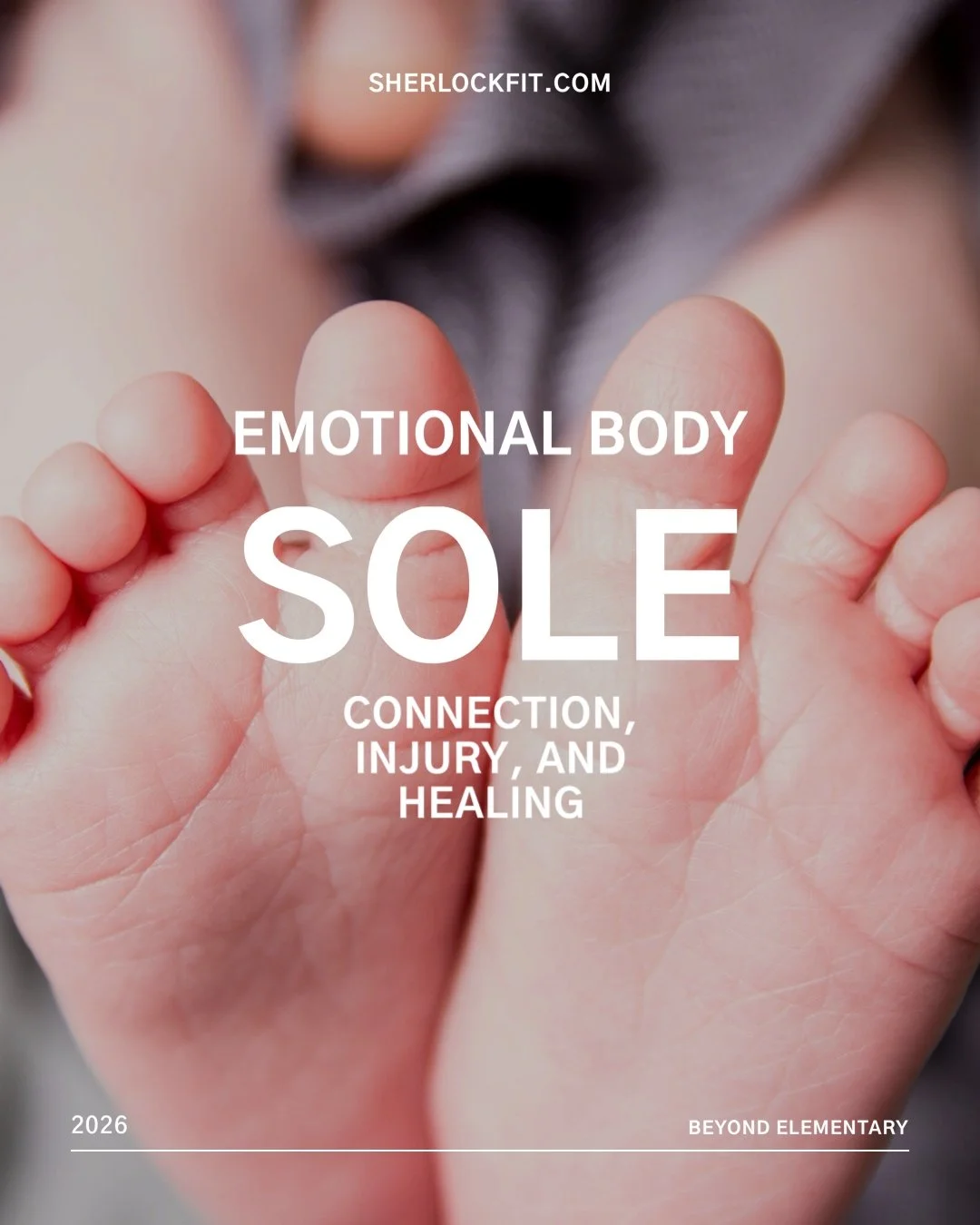
Perhaps the “feet people” are on to something
There is an old saying, often invoked in medical and holistic circles alike, that death begins in the big toe. At first pass, the phrase sounds like folklore but the olde ways always have power. With modern research in somatic therapy, reflexology, and grounding science is beginning to validate: the feet are not merely structural appendages. They are a living interface between the self and the world, carrying emotional weight, storing physiological stress, and, when attended to with intention, serving as one of the most powerful entry points for whole-body healing.
The feet contain approximately 7,000 nerve endings each, making them among the most sensorially dense regions of the human body. Every step taken registers not only mechanical load but also a stream of sensory data that feeds the central nervous system, regulates posture, and informs the body’s understanding of its environment. Yet most people only pay attention to their feet when something goes wrong. Plantar fasciitis, bunions, stress fractures, and gout all demand notice precisely because the feet rarely receive it beforehand. Training culture compounds this neglect. High-impact athletes condition their cardiovascular systems, their posterior chains, their grip strength, while the feet—the literal foundation of every movement pattern—are compressed into shoes and largely ignored.
Psychosomatic therapy offers a different framework. In this view, the body and the emotional life are not parallel tracks but a single integrated system, with the feet occupying a particularly significant position. As practitioners in the field of psychosomatic and emotional anatomy have observed, the feet reveal how a person walks through life on both a physical and emotional level. Tight, alert toes can signal a need for control or defense. Heavy, numb feet may indicate exhaustion, resignation, or disconnection from one’s sense of direction. Every forward step mirrors an internal shift—a thought, an emotion, a decision (Psychosomatics and Emotional Anatomy, “The Language of Feet”).
This intersection of the physical and the psychospiritual is not speculative. The foundational work of somatic therapy pioneers Wilhelm Reich, Alexander Lowen, and Thomas Hanna, and later Bessel van der Kolk in “The Body Keeps the Score,” established that trauma and unresolved emotional material are stored in the body’s nervous system rather than solely in cognitive memory. Somatic therapy, grounded in polyvagal theory developed by Stephen Porges, works to restore nervous system regulation by entering through the body rather than the mind (Wildflower Center for Emotional Health). The feet, as the farthest distal extension of the nervous system from the brain, are often where this stored material first becomes accessible.
From a psychospiritual standpoint, the feet represent direction, movement, and life path. They are understood across multiple traditions as the part of the body most directly connected to grounding—the capacity to be present, stable, and rooted in one’s physical and spiritual journey. Sensations in the feet during periods of significant life transition or emotional release are widely reported. Somatic practitioners note that the feet and legs commonly hold stress and grounding tensions. As emotional or traumatic material releases during inner work, tingling, heat, or spontaneous movement in the lower limbs frequently arises as a somatic signal of discharge and integration (Somatic-Psychotherapy Perspectives).
The ancient practice of reflexology formalizes this understanding into a therapeutic system. Dating to at least 2330 BCE based on hieroglyphics found in Egyptian pyramids, reflexology maps the entire body onto the soles of the feet. Each reflex zone corresponds to an organ system, a gland, or a structural region. The big toe, designated Zone 1 in reflexology, aligns with the central meridian of the body and is believed to correspond to the head, brain, and pituitary gland. Gout, one of the most acutely painful conditions in modern medicine, presents most commonly at the metatarsophalangeal joint of the big toe—the same anatomical zone that in reflexology corresponds to the body’s central regulatory systems (Academy of Ancient Reflexology). That this joint is so frequently the site of systemic inflammatory overload is, from a holistic perspective, far from coincidental.
A 2022 peer-reviewed research review published in the journal “Complementary Therapies in Clinical Practice” found that reflexology may help reduce several types of pain, including pain following surgical procedures, and that it triggers the release of endorphins and enkephalins, improving mental energy and overall well-being (Cai et al.). Beyond pain management, research has identified reflexology’s effects on the nervous system as a mechanism through which broader physiological shifts occur. Pressing on reflex zones stimulates nerve endings, which sends calming signals to the central nervous system, positively influencing breathing, blood flow, and immune response (WebMD). While reflexology is appropriately classified as a complementary modality and should not replace conventional medical care, the accumulating body of peer-reviewed literature supports its role within an integrated wellness practice.
The emotional dimension of foot health extends into the physical presentations seen in clinical and fitness contexts. Foot reading practitioners in the psychosomatic tradition observe that the condition of the skin, arch, and structure of the feet can reflect emotional states. Cracked heels may signal obstacles perceived as blocking forward movement. High arches are associated with a tendency toward independence and difficulty accepting help. Flat feet may reflect a sociable, support-seeking orientation. Callouses and hard skin are interpreted as areas of emotional protection—long-held emotions buried beneath the surface (Revs Reflexology Footwear). Whether one reads these associations literally or metaphorically, they serve as an invitation to attend to the feet with the same intentionality brought to every other aspect of wellbeing.
Healing foot injuries, therefore, is not simply a mechanical or orthopedic process. The research of somatic therapists makes clear that unresolved emotions and trauma can “live” in the body, and that when an area of the body is injured—especially one as foundational as the feet—the emotional content stored there is disrupted and often demands attention (Harvard Health). An athlete recovering from plantar fasciitis or a stress fracture of the metatarsal is not merely repairing collagen or bone density. The rehabilitation period is an opportunity to understand what the body has been carrying, what stresses have accumulated in that tissue, and what changes in load, lifestyle, or emotional patterning may have contributed to the breakdown. Movement therapy, breathwork, and body-scanning practices are all increasingly recognized as components of comprehensive recovery (Mayo Clinic Press).
Grounding, or earthing, brings this conversation into the realm of direct physiological intervention. Multi-disciplinary research published in the “Journal of Inflammation Research” has demonstrated that electrically conductive contact between the human body and the Earth’s surface produces measurable effects on white blood cell counts, cytokine levels, and other markers involved in the inflammatory response (Oschman et al.). The Earth’s surface carries a sustained negative electrical charge, and when the bare soles of the feet contact grass, soil, or sand, the body absorbs free electrons that function as natural antioxidants, neutralizing reactive oxygen species and reducing the oxidative stress that drives chronic inflammation. This is not metaphor. It is electrochemistry.
The practical implications for fitness practitioners and active individuals are significant. A peer-reviewed paper in the “Journal of Alternative and Complementary Medicine” found that grounding reduced muscle soreness following eccentric exercise, and a subsequent study confirmed that grounded subjects showed measurably lower inorganic phosphate-to-phosphocreatine ratios post-exercise, indicating more efficient cellular recovery (Oschman et al.). The autonomic nervous system benefits are equally well documented. Research conducted at the University of California, Berkeley found that individuals who walked barefoot showed greater parasympathetic nervous system activity, resulting in lower blood pressure and improved heart rate variability (Agape Family Health). A 2023 PMC-published study noted that grounding stabilizes autonomic nervous system function by boosting vagal tone—the same mechanism targeted by breathwork, cold exposure, and other recovery modalities already integrated into elite athletic preparation (PMC, Practical Applications of Grounding).
For those unable to ground outdoors regularly, the practice can be approximated through grounding mats, mindful barefoot walking indoors, and somatic foot exercises. Toe-spreading, foot doming, calf raises, and ankle circles activate the intrinsic musculature of the foot, restore proprioceptive sensitivity, and improve the structural integrity that supports every movement pattern from squatting to sprinting. Reflexology, whether self-administered or performed by a certified practitioner, offers a deeper layer of nervous system regulation and can serve as both a recovery tool and a form of preventive maintenance for active individuals.
The feet, taken seriously, change the entire architecture of a wellness practice. They are not where training ends; they are where it originates. The 26 bones, 33 joints, and more than 100 muscles, tendons, and ligaments in each foot are a feat of biological engineering—and they are also, as centuries of somatic and spiritual traditions have recognized, an encoded record of how a person inhabits their life. Injury there is an invitation. Healing there is a recalibration. The sole connection is not just anatomical. It is the relationship between the ground beneath you and the path you are choosing to walk.
Notes for further exploration:
Psychospiritual Meaning of Feet
The feet represent movement, life path, direction, and how we navigate our spiritual and physical journeys. Any sensation or activation in the feet could signify an energetic shift, possibly related to your path or the way you integrate energy in your body. The feet are not just a foundation; they are an extension of consciousness, constantly interacting with the energetic field around us.
Emotional states, including joy, fear, and boredom, often manifest through the feet and legs, making them vital for emotional expression and release, as discussed in Kundalini awakenings, energy often moves through the feet before rising up the spine, marking a significant shift in one’s energetic system. Additionally, reflexology maps every organ to points on the soles, meaning that sensations in the feet could indicate a shift in organ function or deeper healing occurring within the body. — I do not have the rights to a reflexology image but a search engine like google can bring up ones that reflect any healing methodology you are most interested in.
Megan Sherlock is a wellness professional passionate about somatic movement and holistic healing. She combines her expertise in fitness, yoga, and nutrition with the transformative power of energy work to help clients reconnect with their bodies and emotions. Megan holds certifications in NASM CPT, RYT 200, CGFI, CNC, BCS, CF1, ViPR, TriggerPoint SMR, Usui Reiki Master, and PN1. Experience her training in app
Academy of Ancient Reflexology. “Reflexology and Gout.” Academy of Ancient Reflexology, 21 Aug. 2017, academyofancientreflexology.com/reflexology-and-gout/.
Agape Family Health. “Does Walking Barefoot Improve Your Health?” Agape Family Health, 17 July 2024, www.agapefamilyhealth.org/walking-barefoot-and-health-benefits/.
Cai, De-Chang, et al. “Foot Reflexology: Recent Research Trends and Prospects.” Evidence-Based Complementary and Alternative Medicine, 2022, pmc.ncbi.nlm.nih.gov/articles/PMC9819031/.
Harvard Health Publishing. “What Is Somatic Therapy?” Harvard Health, 7 July 2023, www.health.harvard.edu/blog/what-is-somatic-therapy-202307072951.
Mayo Clinic Press. “The Benefits of Somatic Exercises.” Mayo Clinic Press, 17 Apr. 2024, mcpress.mayoclinic.org/living-well/the-befenits-of-somatic-exercises/.
Oschman, James L., et al. “The Effects of Grounding (Earthing) on Inflammation, the Immune Response, Wound Healing, and Prevention and Treatment of Chronic Inflammatory and Autoimmune Diseases.” Journal of Inflammation Research, 2015, pmc.ncbi.nlm.nih.gov/articles/PMC4378297/.
PMC. “Practical Applications of Grounding to Support Health.” National Library of Medicine, 2023, pmc.ncbi.nlm.nih.gov/articles/PMC10105020/.
Psychosomatics and Emotional Anatomy. “The Language of Feet.” Psychosomatics and Emotional Anatomy, www.psychosomaticsandemotionalanatomy.com/blog/the-language-of-feet.
Revs Reflexology Footwear. “Foot Reading with Reflexology.” Revs Store, 7 Apr. 2022, revs.life/blogs/news/foot-reading-with-reflexology.
WebMD. “Reflexology Therapy for Stress, Anxiety, Pain, and Fatigue.” WebMD, 1 Aug. 2025, www.webmd.com/balance/what-is-reflexology.
Wildflower Center for Emotional Health. “Somatic Therapy 101: A Conversation with the Body.” Wildflower Center for Emotional Health, 16 Oct. 2025, www.wildflowerllc.com/somatic-therapy-101-a-conversation-with-the-body/.