
Glutes and Legs- the moving forward muscles
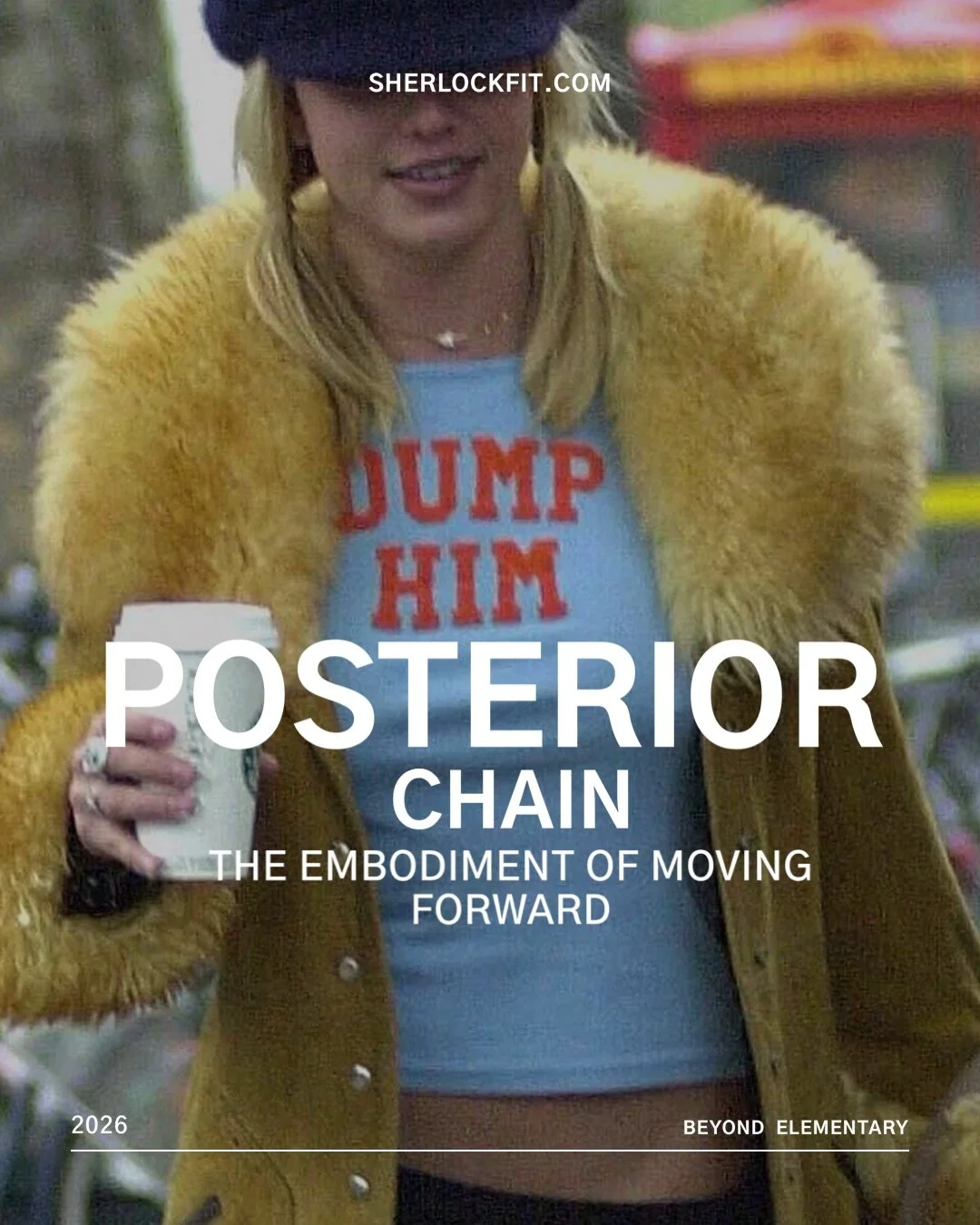
My darling, gather 'round, pull your chair closer to the fire, and let us speak of the architecture of the soul. We are going to discuss something quite magnificent, something often overlooked in the tawdry rush of modern life: the Posterior Chain.
Now, don't let the clinical sound of it bore you. In the gymnasium, they see it as a collection of sinew and bone: the hamstrings, the gluteals, the spinal erectors. But you and I? We know better. We know that the back of the body is the reservoir of our history, the silent witness to every "no" we couldn't say and every heartbreak we tried to outrun.
If you are hurting, if your heart feels like a bruised peach, it is because you have forgotten how to stand in your own strength. To heal is not just a mental exercise, my sweet; it is an act of embodiment.
The Anatomy of "Yesterday"
In the shimmering, high-society gala of the human body, the front (the chest, the quads, the face) is what we present to the world. It's the mask. But the back? The back is where the truth resides.
Science tells us that the posterior chain is a complex network of muscles stretching from the base of your skull down to the very soles of your feet. It is the engine of human locomotion. But spiritually, it is the column of support. When we suffer a heartbreak, we tend to collapse inward. Our shoulders round, our hearts hide behind a cage of ribs, and we become "front-dominant." We are literally cowering from our own lives.
When you hold onto the pain of a lost love, that energy doesn't just vanish into the ether. No, it settles. It settles in the lower back (the seat of our financial and emotional security) and the hamstrings (the muscles that allow us to step forward). If you cannot move on, perhaps it is because your body is literally holding onto the "back-story."
The Glutes: The Throne of Personal Power
Let's be candid, and I do love being candid, the gluteus maximus is the most powerful muscle in the human form. (Of course the tongue makes for valiant competition often holding more power than the sword.) It is meant to propel us upward and onward. Yet, when we are stuck in the mire of grief, we "sit" on our potential. We atrophy.
In the gentle wisdom of the heart, the hips and glutes represent our ability to take a stand. If you feel powerless against the tide of your emotions, we must awaken these giants.
The Physical Act: A deep, soulful squat or a deadlift.
The Spiritual Affirmation: "I am grounded in my own power. I have the strength to lift the weight of my world, and I do so with grace."
As you drive through your heels to stand, you are telling the universe: "I am still here. I am upright. I am un-put-downable."
The Hamstrings: The Tension of Letting Go
Oh, the hamstrings! Those long, stubborn cords of "what if" and "if only."
Physiologically, tight hamstrings often correlate with a pelvis that is tilted, creating a literal imbalance in your foundation. Emotionally, these muscles represent the fear of the future. When we are heartbroken, we tighten. We pull back. We are afraid that if we step forward, we might fall into the abyss again.
To stretch and strengthen the hamstrings is to practice the art of controlled surrender. When you hinge at the hips, keeping your back flat and your heart open to the floor, you are stretching your capacity to handle the unknown. You are lengthening your stride so that you may walk away from what no longer serves you.
The Spine: The Golden Thread of Integrity
The erector spinae (those twin pillars of muscle running alongside your vertebrae) are the guardians of your nervous system. When we are devastated, we "lose our backbone." We slump. We let the weight of rejection curve us toward the earth.
But darling, you were meant to reach for the stars, not study the dust!
The Science: Strengthening the upper back (the rhomboids and traps) pulls the shoulder blades together, which naturally opens the thoracic cavity.
The Spirit: An open chest is a vulnerable chest, yes, but it is also a healing one. By engaging the back to "pull" the front open, you are choosing to stay open to new love, even while the old scars are still pink and tender.
"I am supported by the Universe itself. My back is strong, and my heart is soft. I move forward with the elegance of one who knows they are cherished."
Louise Hay and the Geography of Grief
Now, if you've had the pleasure of reading Louise Hay's transformative work "You Can Heal Your Life," you'll recognize what we're dancing around here. Louise, that magnificent woman, taught us that our bodies are living maps of our emotional landscapes. Every ache, every tension, every chronic pain is a love letter from our subconscious, begging us to pay attention.
In her teachings, Louise identified the lower back as the place where we store our fears about money and support. When we say "I can't afford to leave this relationship" or "I have no support system," where do you think that manifests? Right there in the lumbar region, creating a dull ache that no amount of ibuprofen can touch.
The hips, according to Louise, are about moving forward in life with balance and ease. When we're stuck in the past, replaying conversations that will never happen, imagining futures that died on the vine, our hips lock up. We literally cannot take the next step. The body, in its infinite wisdom, is saying: "You're not ready to move. You're still processing."
And the legs? They carry us forward into our future. When our hamstrings are chronically tight, when our calves cramp, when our glutes have forgotten how to fire, we are telling ourselves a story about our inability to move on. The body becomes the prison, but it can also become the key.
The Neuroscience of "Backing" Yourself
Let's get deliciously scientific for a moment, shall we? Dr. Bessel van der Kolk, in his groundbreaking book "The Body Keeps the Score," illuminated something we've all felt but couldn't quite name: trauma lives in the body. Our muscles have memory. Our fascia holds onto experiences like a photograph album made of flesh.
When we experience heartbreak, our sympathetic nervous system (that primitive fight-or-flight response) kicks into overdrive. We are in a state of perpetual threat. The body reads "romantic rejection" the same way it reads "saber-toothed tiger." And what do we do when we're being chased? We curl forward to protect our vital organs. We tuck our chin, round our shoulders, and make ourselves small.
This protective posture, while useful for avoiding predators, is absolutely devastating for moving through emotional pain. Why? Because when we're curled forward, we're literally cutting off our ability to engage the posterior chain. We cannot fire our glutes if our pelvis is tucked under. We cannot lengthen our hamstrings if we're perpetually in a defensive crouch. We cannot stand tall if our erector spinae have gone dormant.
The solution, then, is not just psychological. It's biomechanical. We must literally "straighten our backs" to straighten our minds. When you strengthen your posterior chain, you are building the muscular infrastructure that allows your nervous system to shift from sympathetic (stressed) to parasympathetic (calm). You are teaching your body that the threat has passed, and it is safe to stand tall again.
The Chakra Connection: Your Energetic Backbone
For those of you who resonate with Eastern philosophy, the posterior chain aligns beautifully with several key chakras. The root chakra (Muladhara), located at the base of the spine, governs our sense of safety and groundedness. When this chakra is blocked, we feel unmoored, anxious, unable to trust that we'll be okay.
Engaging the glutes and the pelvic floor directly stimulates this energy center. Think about it: when you perform a glute bridge, you're literally lifting your root chakra toward the heavens, declaring your worthiness to take up space on this earth.
The sacral chakra (Svadhisthana), just below the navel, is our center of creativity, pleasure, and emotional flow. It's also where we process relationship dynamics and sexual energy. When we've been hurt, this chakra can become stagnant. We stop creating. We stop feeling pleasure. We stop flowing.
The undulating movement of hip thrusts, the rhythmic pulse of kettlebell swings, these are not just exercises. They are rituals of reawakening. You are quite literally pumping energy back into your sacral center, reminding it that pleasure is still possible, that you are still a creature of desire and creation.
The Metaphor of Propulsion
Here's something beautiful to consider: the posterior chain is called the "propulsion chain" in athletic training circles. These muscles don't pull you backward; they push you forward. Every time you take a step, it's your glutes and hamstrings that drive you into the next moment.
Isn't that poetic? The muscles on the back of your body are the ones responsible for forward momentum. The past quite literally propels you into the future.
This is where we can borrow wisdom from Joseph Campbell and his concept of the hero's journey. Campbell understood that we cannot reach the promised land without first passing through the underworld. We cannot be reborn without first experiencing the death of who we were.
Your posterior chain is your underworld. It's the shadow side, the part you can't see in the mirror without turning around. But it's also your launching pad. When you learn to trust these muscles, to feel them engage, to know that they will support you as you leap, you become unstoppable.
Let me give you some specific practices, darling, because theory without application is just pretty words at a cocktail party.
The Deadlift as Resurrection:
When you bend down to pick up that barbell (or those grocery bags, or that broken heart), you are practicing the art of meeting your pain where it lies. You hinge at the hips. You keep your spine neutral. You engage your lats (that beautiful latissimus dorsi muscle that wraps around your ribcage like a protective wing). And then, through the power of your glutes and hamstrings, you rise. You lift the weight off the ground. You resurrect yourself. Every. Single. Time.
As you lift, whisper this: "I am capable of carrying this. I am strong enough to rise."
The Glute Bridge as Offering:
Lie on your back. Plant your feet firmly on the earth. Press through your heels and lift your hips toward the sky. At the top of the movement, squeeze your glutes as if you're trying to crack a walnut between them. This is not vanity; this is activation. You are lighting up the neural pathways that have gone dark.
The affirmation: "I am open. I am rising. I am supported from below."
The Single-Leg Romanian Deadlift as Balance:
This one is exquisite for those of us who feel unsteady after heartbreak. Stand on one leg. Hinge forward at the hip, extending your other leg behind you for balance. Feel your hamstring stretch. Feel your standing glute work to stabilize you. You are learning that you can balance on your own. You don't need someone else to keep you upright.
Repeat quietly: "I am my own foundation. I am steady within myself."
The Kettlebell Swing as Release:
This is my personal favorite for grief. The swing is all about hinging, loading the hamstrings and glutes, and then explosively extending the hips to propel the weight forward. You are quite literally practicing the motion of "letting go." The kettlebell swings away from you, and you trust that momentum will bring it back. You learn that release doesn't mean loss; it means flow.
As you swing: "I release what no longer serves me. I trust the rhythm of my life."
The Cultural Context: Why We've Forgotten Our Backs
We live in a front-facing culture. We stare at screens. We drive cars. We hunch over desks. We take selfies. Everything is about what we present, what we project, what we perform for the outside world. We have become a society of anterior-dominant creatures, and it's killing us.
The epidemic of lower back pain, the scourge of "tech neck," the prevalence of hip replacements, these are not random. They are the physical manifestation of a culture that has forgotten how to honor the unseen parts of ourselves.
In her book "Women Who Run with the Wolves," Clarissa Pinkola Estés talks about the wild woman archetype, the part of us that is instinctual, powerful, and deeply connected to our bodies. This wild woman doesn't live in the carefully curated Instagram feed. She lives in the posterior chain. She is the strength you cannot see but can always feel. She is the power that has been there all along, waiting for you to remember her.
When we strengthen our backs, we are reclaiming our wildness. We are saying: "I am more than my presentation. I am the force that moves mountains, even when no one is watching."
The Ritual of Movement
To truly heal from heartbreak, you must treat your workout as a prayer. You are not just burning calories; you are burning away the ghosts of men and women who didn't know how to love you.
When you engage your posterior chain, you are practicing propulsion. You are teaching your nervous system that it is safe to move away from the past. Every bridge pose, every kettlebell swing, every row is a declaration: "I am the author of my own trajectory."
A Daily Practice for those on a Healing Journey:
Morning: Stand tall. Feel your heels root into the earth. Roll your shoulders back and down, tucking them into your "back pockets." Feel the strength behind you.
Movement: Focus on "pull" exercises. Pull the life you want toward you. Push the earth away to rise.
Evening: Forgive your hamstrings for being tight. Forgive your heart for being heavy. Rub your lower back and thank it for carrying you through the day.
The Alchemy of Integration
Here's what nobody tells you about healing: it's not linear. Some days you'll wake up and your glutes will fire like champions, and you'll feel invincible. Other days, your lower back will seize up, and you'll remember exactly how it felt when they left. This is normal. This is the process.
The key is integration. You cannot ignore the pain and expect it to dissolve. You cannot bypass the body and expect the mind to heal. You must bring them together, marrying the physical practice with the emotional awareness.
When you feel a trigger (and you will feel triggers), stop. Place your hand on your lower back. Ask yourself: "What am I afraid of losing support around?" Breathe into that space. Then, when you're ready, perform a movement that engages that area. A bridge. A deadlift. A simple cat-cow stretch. You are showing your body that you hear it, and you are capable of caring for it.
A Final Toast to Your Resilience
My darling, heartbreak is a beast, but it is a beast that can be tamed through the glory of the body. You are a divine creature, a masterpiece of engineering and light. Do not let the "front" of your life (the superficialities, the temporary pains) distract you from the "back" of your life: your history, your strength, your foundation.
The posterior chain is your engine of evolution. Use it. Stand up straight, squeeze those glutes as if you're holding a winning lottery ticket between them, and walk out of that door. The future is waiting, and it's quite a marvelous party.
Remember this: every step forward is powered by the muscles on the back of your body. You are not running away from your past. You are being propelled by it. The heartbreak, the loss, the devastating beautiful mess of it all, this is your fuel now. This is what makes you strong enough to leap into whatever comes next.
So strengthen that posterior chain. Love it. Honor it. Let it carry you into a future so bright, so full of possibility, that when you look back on this moment, you'll barely recognize the person who was brave enough to stand up and start walking again.
You've got this, darling. Now go show the world what a properly engaged glute can do.
Megan Sherlock is a wellness professional passionate about somatic movement and holistic healing. She combines her expertise in fitness, yoga, and nutrition with the transformative power of energy work to help clients reconnect with their bodies and emotions. Megan holds certifications in NASM CPT, RYT 200, CGFI, CNC, BCS, CF1, ViPR, TriggerPoint SMR, Usui Reiki Master, and PN1.